LEGAL RESPONSE TO TERRORISM- INDIA AND THE WORLD
Abstract
LEGAL
RESPONSE TO TERRORISM- INDIA AND THE WORLD
1978
Massacre
of Sri Lankan policemen in 1990; Eastern Province, Sri Lanka; 600–740 killed
•
The LTTE (Liberation Tigers of Tamil Eelam) are the perpetrators.
1998
1985
The Pulwama attack of 2019 is a
term used to describe a significant terrorist incident that occurred on
February 14, 2019, in the Pulwama area of Jammu & Kashmir, India. It was a
suicide bombing that was intended to strike a convoy of cars transporting
Indian security guards. An explosives-laden car was rammed into the convoy,
causing a huge explosion. A member of "Jaish-e-Mohammed" (JeM), a
militant organisation with a stronghold in Pakistan that operates in Jammu and
Kashmir, committed the attack. One of the buses was struck by the attacker's
vehicle that was carrying explosives, resulting in serious injury and
fatalities. The Pulwama incident claimed the lives of 40 members of the
"Central Reserve Police Force" (CRPF) and injured numerous more.
1999
Russian apartment bombings
|
|
Terrorism
|
Naxalism
|
|
1.Ideological
Differences:
|
Terrorism is primarily motivated
by political, religious, or ideological ideologies. Terrorist groups aim to
create fear and panic among the general population and the government by
employing violence and intimidation tactics.
|
Naxalism, also known as
Maoism, is a left-wing extremist ideology inspired by the principles of Mao
Zedong. Naxalite groups seek to overthrow the democratic system and establish
a communist state through armed struggle. Their primary focus is on
socioeconomic issues and the redistribution of land and resources.
|
|
2. Geographical Scope:
|
Terrorist activities in
India are widespread and can occur in various parts of the country. These attacks
are often carried out by both domestic and international extremist groups and
can target major cities, religious sites, transportation networks, or
government installations.
|
Naxalism is primarily
concentrated in certain states of India, particularly in remote and forested
areas. The most affected states include Chhattisgarh, Jharkhand, Bihar,
Odisha, and parts of Maharashtra, Andhra Pradesh, and Telangana. Naxalites
operate in rural and tribal regions and often target security forces,
government infrastructure, and individuals perceived as opposing their
ideology.
|
|
3. Objectives and
Tactics:
|
Terrorist groups aim to destabilize the
government, create fear, and often have political or ideological demands.
They employ tactics such as bombings, suicide attacks, hostage-taking, and
targeted assassinations.
|
Naxalite groups seek to
overthrow the democratic system and establish a communist regime. They
operate as guerrilla forces, conducting ambushes, attacks on security forces,
and assassinations of individuals considered as class enemies or government
informants.
|
|
4. State Response:
|
The Indian government
has taken several measures to combat terrorism, which includes strengthening
intelligence agencies, enhancing security measures, enacting anti-terrorism
laws, and improving international cooperation to counter cross-border
terrorism.
|
The government's
response to Naxalism involves a multi-pronged approach that includes
development initiatives, addressing socioeconomic grievances, deploying
security forces for counterinsurgency operations, and implementing programs
for tribal welfare and infrastructure development in affected areas.
|
|
5. consequences
|
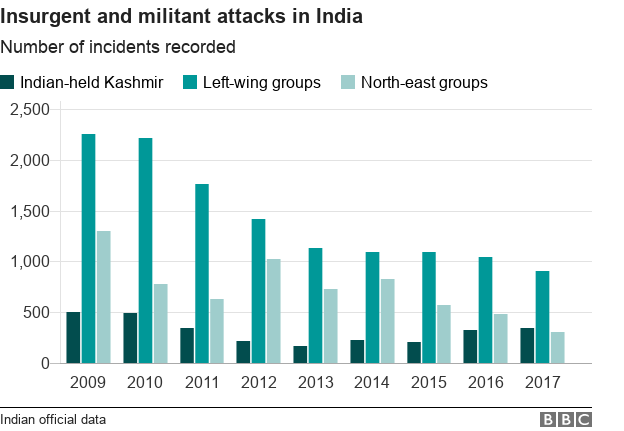
The Indian government published information in
July 2016 about a series of terror attacks that occurred in India between
2005 and 2015 and resulted in 707 fatalities and more than 3,200 injuries. [8]
|
Over 12,000 individuals,
including members of the security forces, have been killed by naxals in the
nine states affected by left-wing extremism in the past 20 years.
According to the Home
Ministry's response to an RTI inquiry, 2,712 federal and state security
forces and 9,471 citizens were counted.[9]
|
Published Paper
Author Details
Article Information
LEGAL RESPONSE TO TERRORISM- INDIA AND THE WORLD
Authors: NIKHIL KUMAR, BHANU PRATAP SINGH
- Journal IJLRA
- ISSN 2582-6433
- Issue 7
About Journal
International Journal for Legal Research and Analysis
- AbbreviationIJLRA
- ISSN2582-6433
- AccessOpen Access
- LicenseCC 4.0
All research articles published in International Journal for Legal Research and Analysis are open access and available to read, download and share, subject to proper citation of the original work.

Disclaimer: The opinions expressed in this publication are those of the authors and do not necessarily reflect the views of International Journal for Legal Research and Analysis.